Business Case Study: Artefact H
- Ella Harder

- May 14, 2020
- 5 min read
Introduction:
For my business case study, I chose to interview the owner of Richmond Hydrotherapy Centre in Warsash, Natalie. Natalie performs hydrotherapy on my Springer Spaniel, Lily as she has osteoarthritis in all of her limbs. The difference that hydrotherapy makes on Lily is huge and I thought a hydrotherapist would be the perfect person to interview as it is relevant to the Canine Therapy course and I plan to train in hydrotherapy once I have graduated. Due to Covid-19 and not being able to go out and see her face to face, the interview was carried out over the phone, which actually worked out really well.
Qualifications:
Natalie was one of the first hydrotherapists to qualify by training for a Level 3 certificate in Small Animal Hydrotherapy as before then all you needed to qualify as a hydrotherapist was basic water training and Canine First Aid. Natalie trained for this certificate at Greyfriars Rehabilitation and Hydrotherapy Referral Centre in Guildford. Every 2 years Natalie has to re-train in Canine First aid to make sure she is legally and safely working and knows how to handle emergency situations if they were to occur at Richmond Hydrotherapy Centre.
Legal Status:
To be able to work as a hydrotherapist Natalie has to register with a legal association. The association that Natalie is registered with is The Canine Hydrotherapy Association. The reason why therapists have to register with a legal body is so that they can get approved in the work they do and their clients can trust that the therapist is fully trained and fit to do therapeutic work on their pet. The Canine Hydrotherapy Association was first founded in 2000 and was the first association of its kind.
Their aim is to make sure hydrotherapists register with them have completed the appropriate qualifications (Level 3 in Small Animal Hydrotherapy) and perform 25 hours of CPD (Continual Professional Development) every year as well as Canine First Aid training every 2 years. This means that clients can be reassured that a hydrotherapist has done all the correct training and is well suited to look after their pet.
Length of Time in Practise:
Natalie has been a trained and working hydrotherapist for 10 years now, having set up her business from a run-down chicken barn and turning into the large hydrotherapy complex it is now. The site where she built her hydrotherapy centre is now a small business park with a dog groomers and other small businesses.
Target Market:
Natalie performs hydrotherapy on dogs, cats and even a rabbit. All have been referred to her from a veterinarian, with either, neurological problems, musculoskeletal issues such as arthritis, hip and elbow dysplasia etc. She will also work with pets who have just had surgery to build up their muscle mass and strength in the affected area. Hydrotherapy is a really good form of therapy for injuries like that as it works the muscles and body gently so it isn’t painful or uncomfortable for the pet.
Advertisement:
When Richmond Hydrotherapy Centre first opened up, Natalie used posters and flyers in veterinary surgeries and local village halls to advertise and since then has relied on word of mouth and Facebook to advertise. Warsash is a very close community, so word-of-mouth is actually a really good way of building a business. Natalie is also highly recommended by vets in the area so that definitely helps build her client base. The Richmond Hydrotherapy Centre page on Facebook has over 500 followers showing that she has built a large community around her business.
Legislation:
To become any sort of animal therapist there are lots of legislation that has to be followed. One really important legislation in the Animal Welfare Act 2006. This act states that no animal should experience unnecessary harm or pain and should have appropriate environment, food and water and social and enrichment requirements. It means that anyone who is deemed as not looking after their pet adequately can be prosecuted against. In a hydrotherapy setting, there are quite a few things that could possibly go wrong or harm an animal such as the pool, any chemicals in the pool that could irritate an animals skin etc. This is why a business-like Richmond Hydrotherapy needs to have appropriate measures in place to prevent harm to animals and make sure that their needs are appropriately met. For example, Natalie makes sure that she showers down every animal after they have been using the pool to make sure that they will have no lingering chemicals on them. An offence under the Animal Welfare Act is failure of preventative measures that cause an animal to suffer (Legislation.gov.uk, 2006) So by Natalie having those measures in place she is abiding by the Animal Welfare Act.
Another legislation that must be followed is the Veterinary Surgeons 1966. This act states that only a qualified veterinarian can carry out certain tasks such as diagnosing, prescribing and administering medication and performing surgery on an animal, which mean physiotherapists must not perform any of these things. It sounds easy but may prove difficult if an animal is being seen with an obvious health problem that the owner is unaware of, the initial reaction would be to let the owner know and diagnose the dog, but that would be an offence under the Veterinary Surgeons Act, so it’s important for any animal therapist that instead of diagnosing they just mention that something is wrong and the pet must see a veterinarian. A similar Legislation that therapists must follow is the Veterinary Surgery Exemptions Act 1962 that states if an animal has been referred to by a vet, it can undergo any therapy that may benefit it’s wellbeing. Because of this, on the Richmond Hydrotherapy website you can see that there is a veterinary referral form that can be filled out by a vet to make sure that the hydrotherapy can be legally carried out on the animal. This means that Natalie is safely carrying out her hydrotherapy.
There are other legislations too such as COSHH (Control of Substances Hazardous to Health) and The Health and Safety at Work Act 1974 that need to be considered, but there are only 2 employees at Richmond Hydrotherapy Centre, meaning that Natalie does not need to have a detailed risk assessment, as long as she has control measures in place to prevent accidents she is following these regulations. COSHH is relevant too as there are going to be chemicals needed to make sure that the pool water in safe, but as long as these chemicals are clearly labelled and there is a COSHH sheet up in the workplace, Natalie is abiding by this legislation.
Overall, it has been really interesting to learn about Richmond Hydrotherapy Centre and interview a professional about a relevant career. It has made me realise that there is a lot of responsibility to run your own business but is also really rewarding. After a lot of hard-work Natalie now has a large client base and loves what she does. This inspires me to one day run my own therapy clinic and to be able to help out animals like Natalie does.

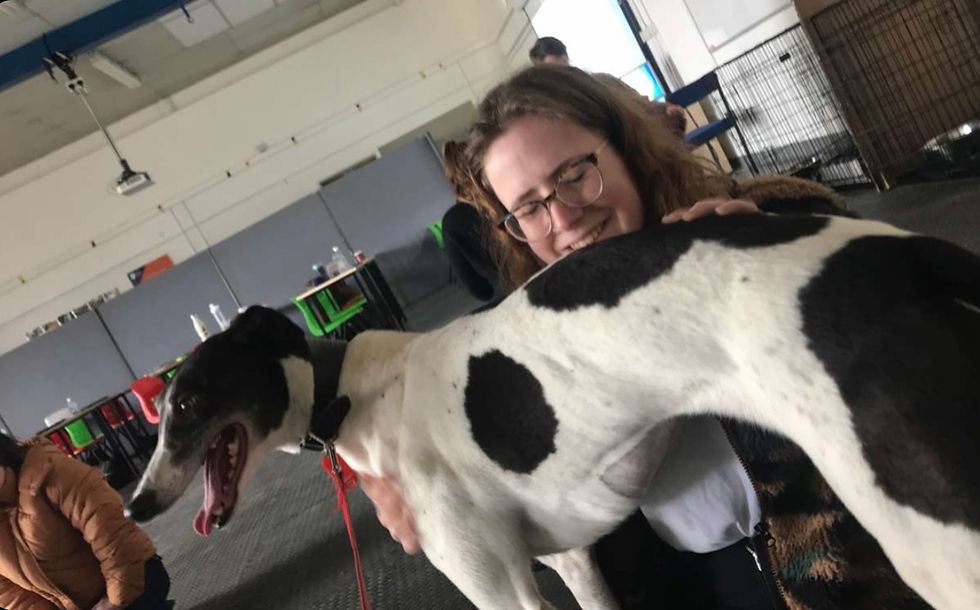
Above is an image of my dog Lily doing hydrotherapy at Richmond Canine Hydrotherapy Centre.
References:
Canine Hydrotherapy Association. N.D. Canine Hydrotherapy Association. [Online]. [13 May 2020]. Available from: http://www.canine-hydrotherapy.org/
Legislation.gov.uk. 1962. The Veterinary Surgery (Exemptions) Order. [Online]. [13 May 2020]. Available from: https://www.legislation.gov.uk/uksi/1962/2557/made
Legislation.gov.uk. 1966. The Veterinary Surgery Act . [Online]. [13 May 2020]. Available from: http://www.legislation.gov.uk/ukpga/1966/36/section/5B
Legislation.gov.uk. 2006. Animal Welfare Act. [Online]. [13 May 2020]. Available from: http://www.legislation.gov.uk/ukpga/2006/45/contents
Prankel, S., 2008. Hydrotherapy in practice. In practice, 30(5), pp.272-277.
Richmond Canine Hydrotherapy Centre. N.D. What is Hydrotherapy?. [Online]. [13 May 2020]. Available from: http://www.richmond-hydro.com/
Veenman, P., 2006. Animal Physiotherapy. Journal of Bodywork and Movement Therapies, 10(4), pp.317-327.
Winter, R., 2016. Hydrotherapy and physiotherapy: what the RVN should know. Veterinary Nursing Journal, 31(10), pp.312-315.


Comments