Reflection on Functional Anatomy Workbook - Artefact G
- Ella Harder

- May 11, 2020
- 2 min read
As part of the Function Anatomy module, we had to complete a 3-part workbook. The first section was a bony landmark section, the second section was a theory section and the final part was a practical/ dissection section.
The bony landmark section to the workbook was really difficult as it was the first piece of work we had to do in semester B and in semester A, our Canine Therapy group had to take Biomechanics instead of Introduction to Canine Therapy which meant we hadn’t learnt about bony landmarks when this assignment was first set. Although Claire Styles did help with organising a bony landmarks lecture for our class and extending our deadline, it still proved difficult for me as I still felt like I had limited knowledge on the topic. Despite this, I was actually very proud of my final piece and I ended up getting a good grade on it despite the complications with it.
The second section of this assignment was really difficult as it was really long and had loads of different aspects to it. Despite this I really enjoyed drawing the separate vertebrae as it helped me to learn in depth about the detail to the bony landmarks and it was good revision. The joint table I found really difficult, however, as none of the sources I used were in depth about different joints and it seemed like there were so many different types of joints with different names which made it hard to be 100% certain on if I was right or not. I think that the table was probably the reason I didn’t get the best grade on this assignment. I feel like I could have worked harder on this section.
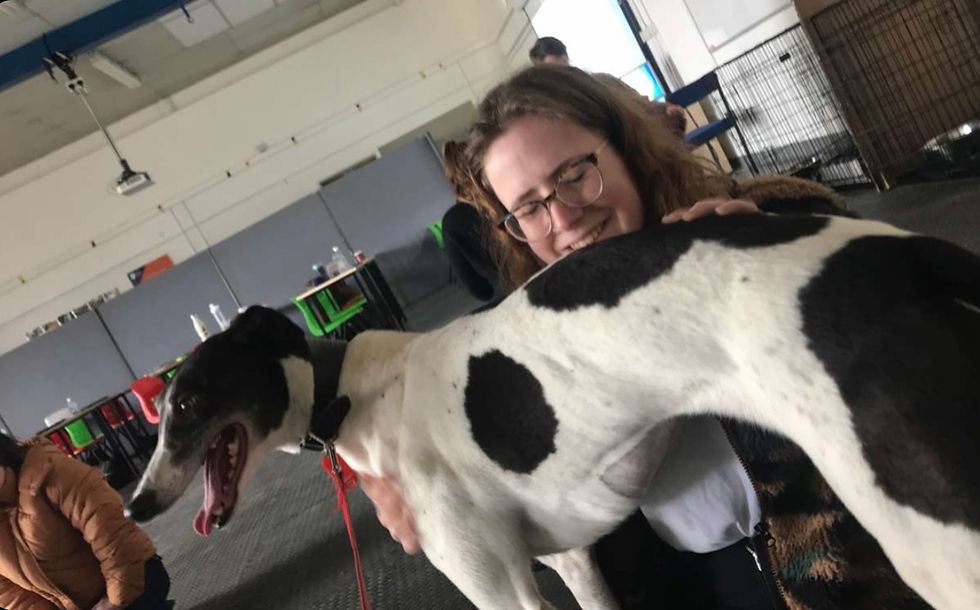
The practical section was actually the best one for me as I really enjoy learning about muscles and I find it much easier than joints. I also really enjoyed are dissections so it helped me tie the two together and push my knowledge. I did struggle on finding good pictures though to put into this assignment though as for our dissections the fox we had used was really skinny and didn’t have much muscle on it which made them harder to identify and especially harder to find good pictures of. I didn’t add in any pictures from our palpation practical’s as I didn’t get many pictures as we didn’t have that many practical’s and the ones we had were focusing on palpation and also most of the greyhounds we had used were really nervous.
This aside, I have found the workbook really helpful, and it does help to go through and work aside our lectures as it helps me to digest information. I also really like the workbook format rather than a whole assignment as it breaks up topics and gives structure which helps me to work though at a good pace and not rush anything which I feel like I sometimes do during assignments.
References:
Aspinall, V & Cappello, M (2015). Introduction to Veterinary Anatomy and Physiology Textbook. (3rd ed.). Elsevier.


Comments